

Entrance fee – 50-70 KGS

Summer 09:00 – 20:00
Winter 09:00 – 17:00

Monday

+996 703 57 27 77
Add to My Tour
Hujra of Babur, the Founder of the Mughal Empire
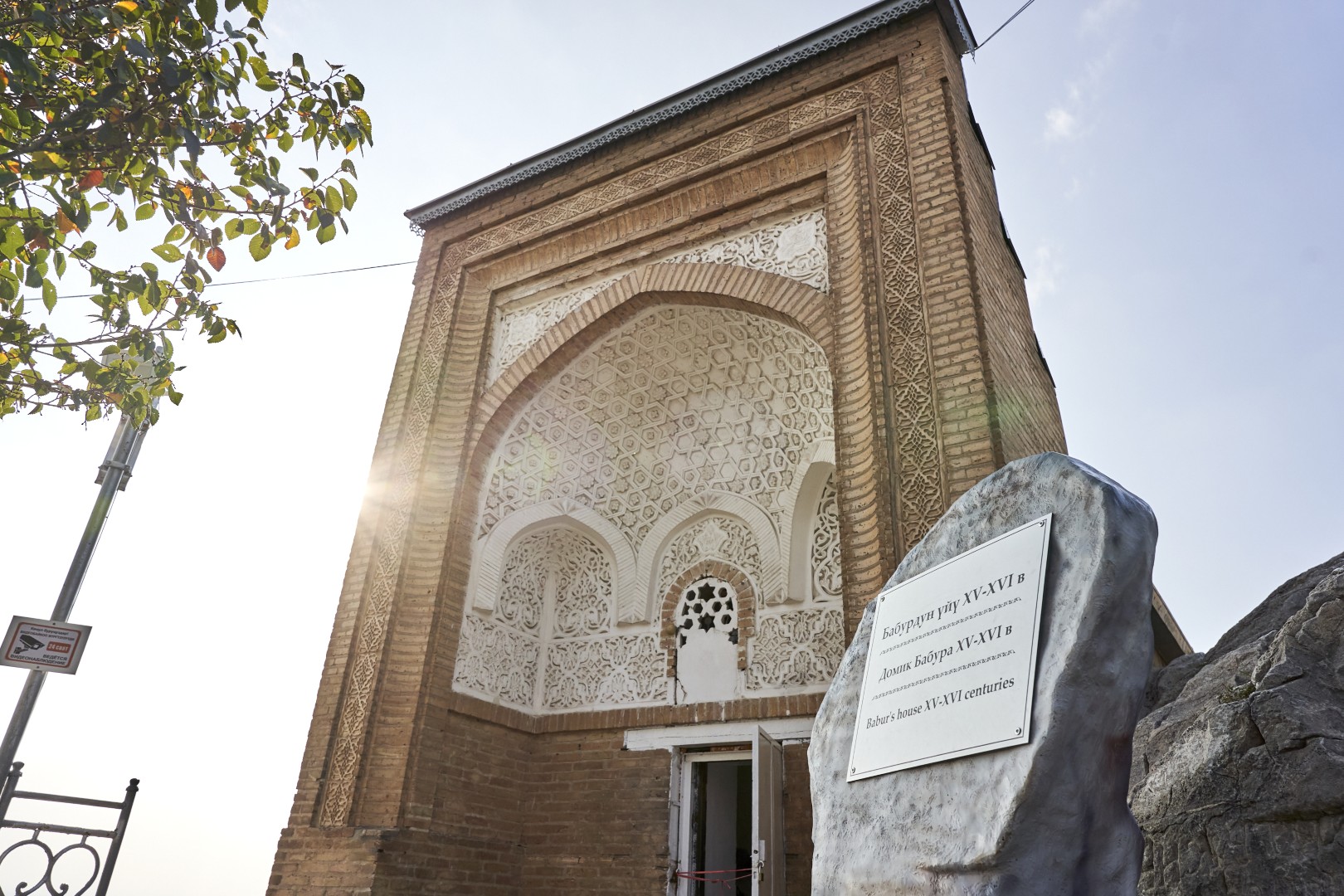
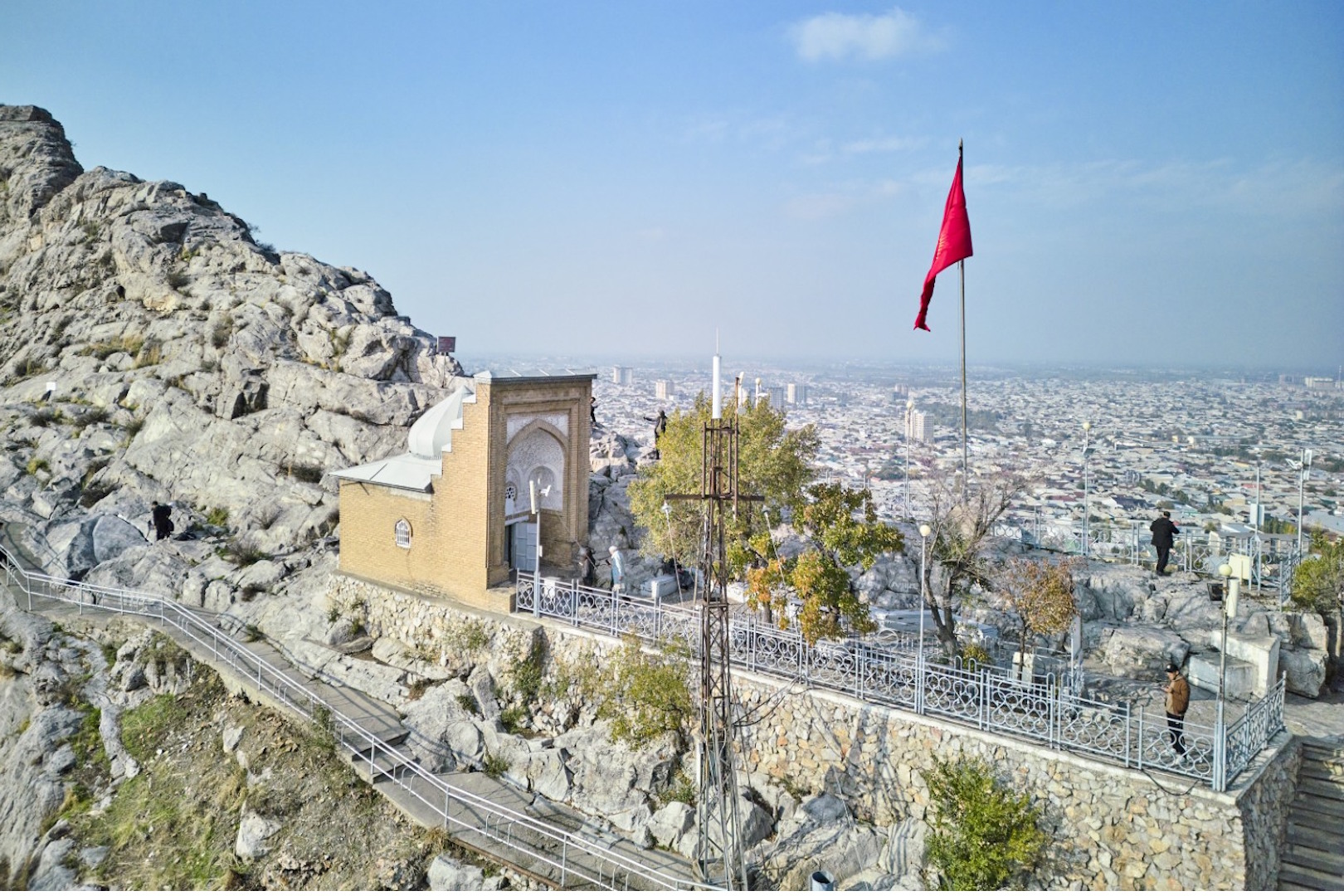
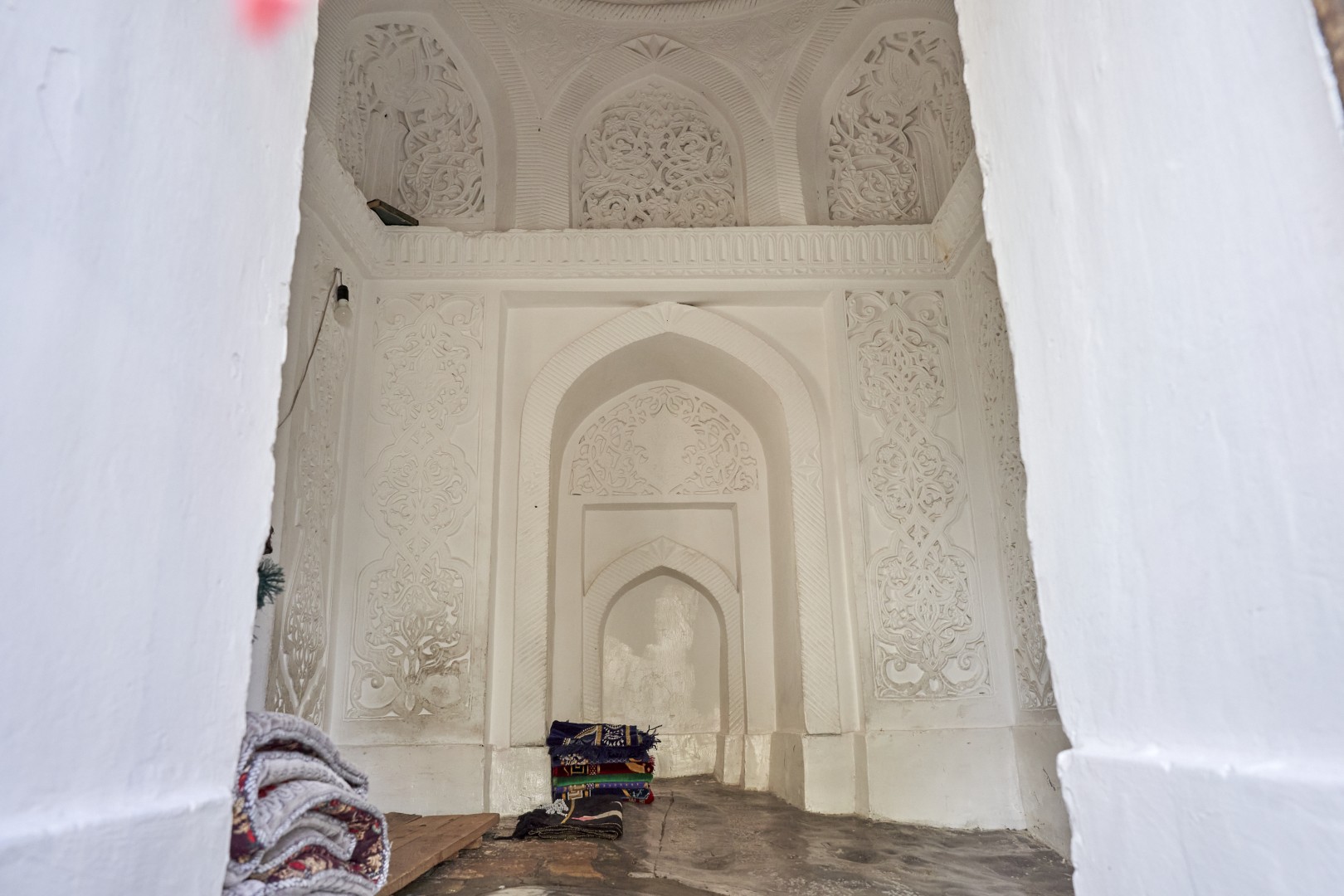
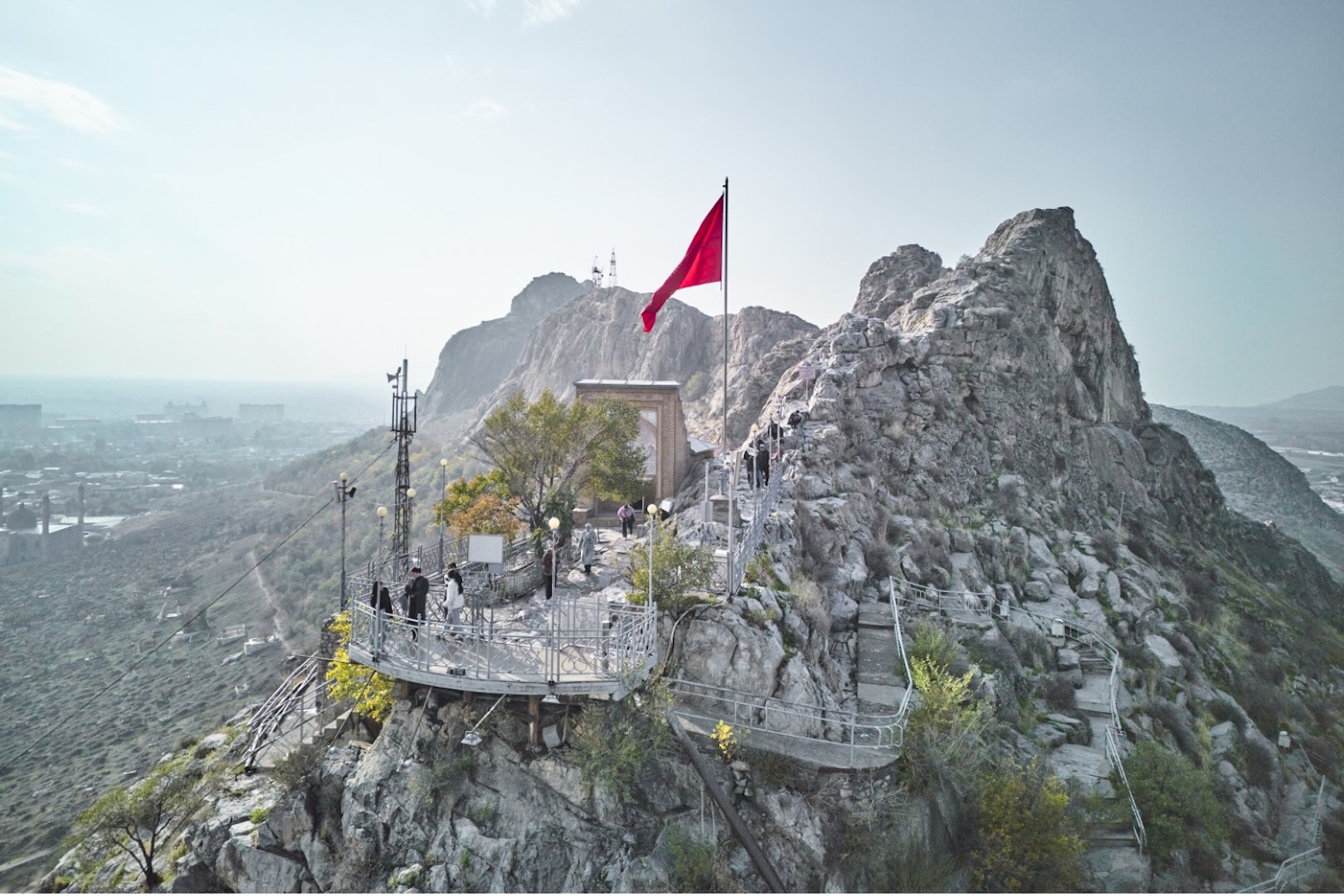
The most famous historical monument on Suleiman Mountain is the hujra of Zahīr ud-Dīn Muhammad Babur, the founder of the Mughal Empire in the Hindustan Peninsula. In Islamic tradition, a hujra is a small cell or room in a madrasah where pilgrims prayed and rested.
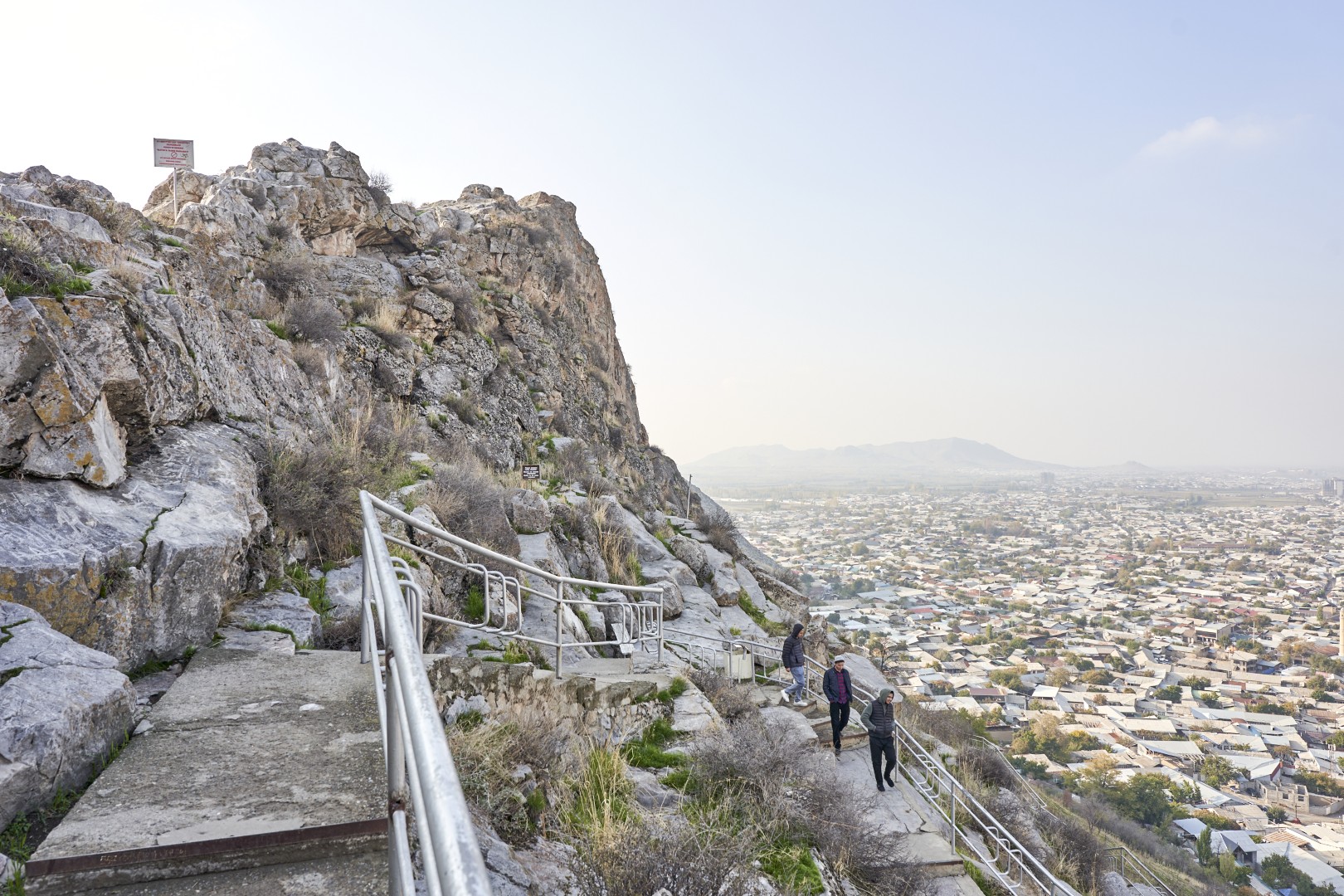
Babur’s prayer room appeared on the northern ledge of the mountain in 1496-1497. He describes its creation in his treatise Babur-Name: “To the southeast of the fortress there is a beautiful mountain called Bara-Kukh. On top of this mountain, Sultan Mahmud-khan has built a hujra. Below it, on a ledge of the mountain, I also built, in the year nine hundred and two, a hujra with an iwan. Although his hujra was higher than mine, mine was much better situated, with the whole city and its suburbs spread out under my feet.”
The hujra of Sultan Mahmud Khan, mentioned by Babur, was built in the second half of the 15th century from durable brick, whitewashed with a mixture of lime and chalk. It had also been destroyed, but it was not restored. All that remained of it was brickwork on top of the mountain.
“Babur’s house,” as the townspeople call it, was demolished (possibly even blown up) in 1963, during an anti-religious campaign. There were even policemen on duty at the mountain so that pilgrims would not attempt to perform any rituals or pray there.
In 1986, the Kyrgyz Restoration Research and Design Bureau, together with craftsmen from Bukhara and Khiva, developed a project to restore the hujra of Babur. In the summer of 1989, a chain of people lined the northern slope to help builders restore the prayer house, passing bricks and other construction material from hand to hand.
Babur fondly remembered Osh and Suleiman Mountain, where as a teenager he walked the mountain trails and prayed. The Osh people likewise cherish the memory of this great descendant of Timur and Genghis Khan, who loved their city and its beautiful mountain.

Locations Nearby
-
The beginning: Osh settlement
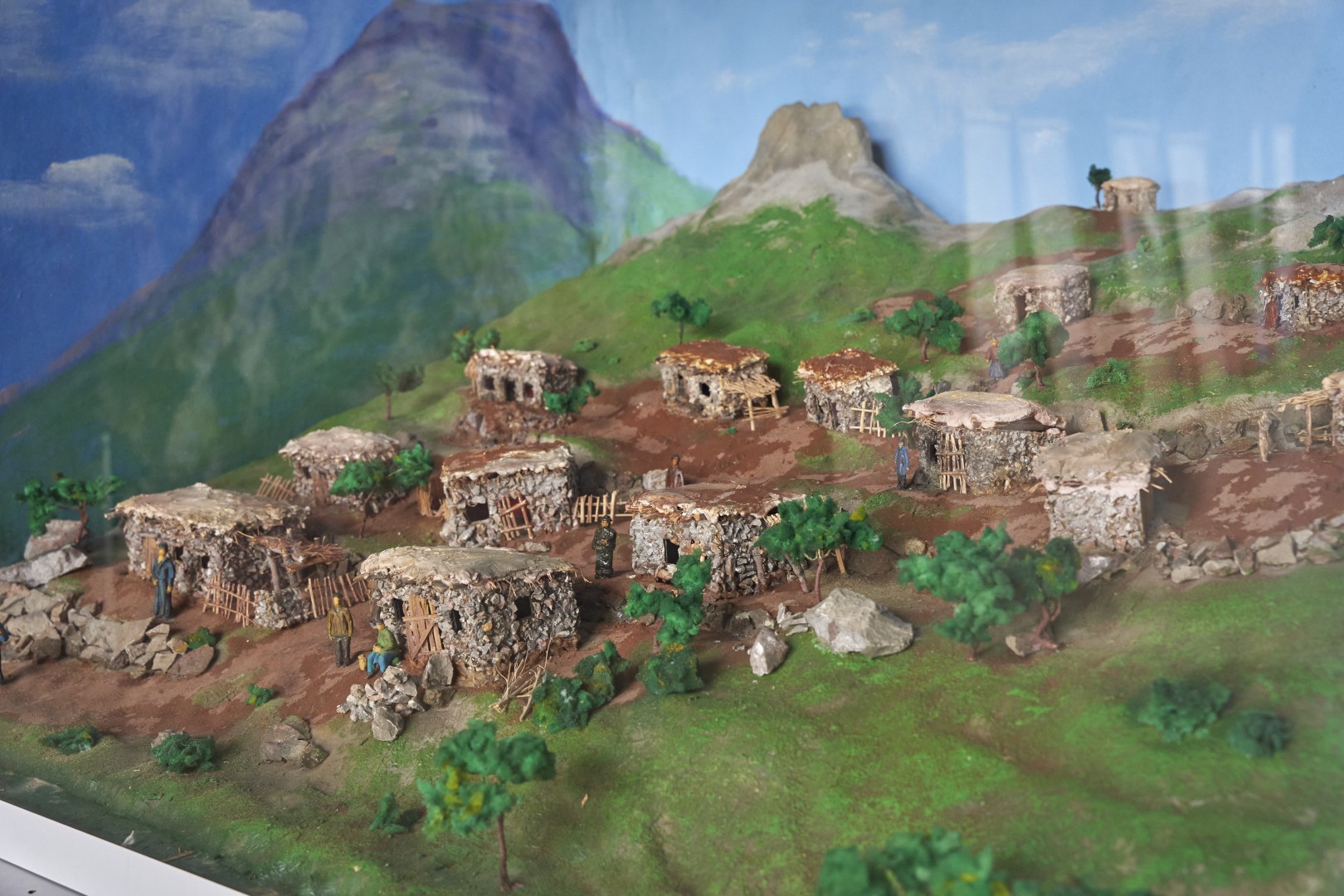
In 1967, Elena Druzhinina, the Head of the Pre-Soviet History Department of the Osh Regional Local History Museum, found fragments of ceramics identical in origin…
-
Peaks and Caves of Suleiman Mountain
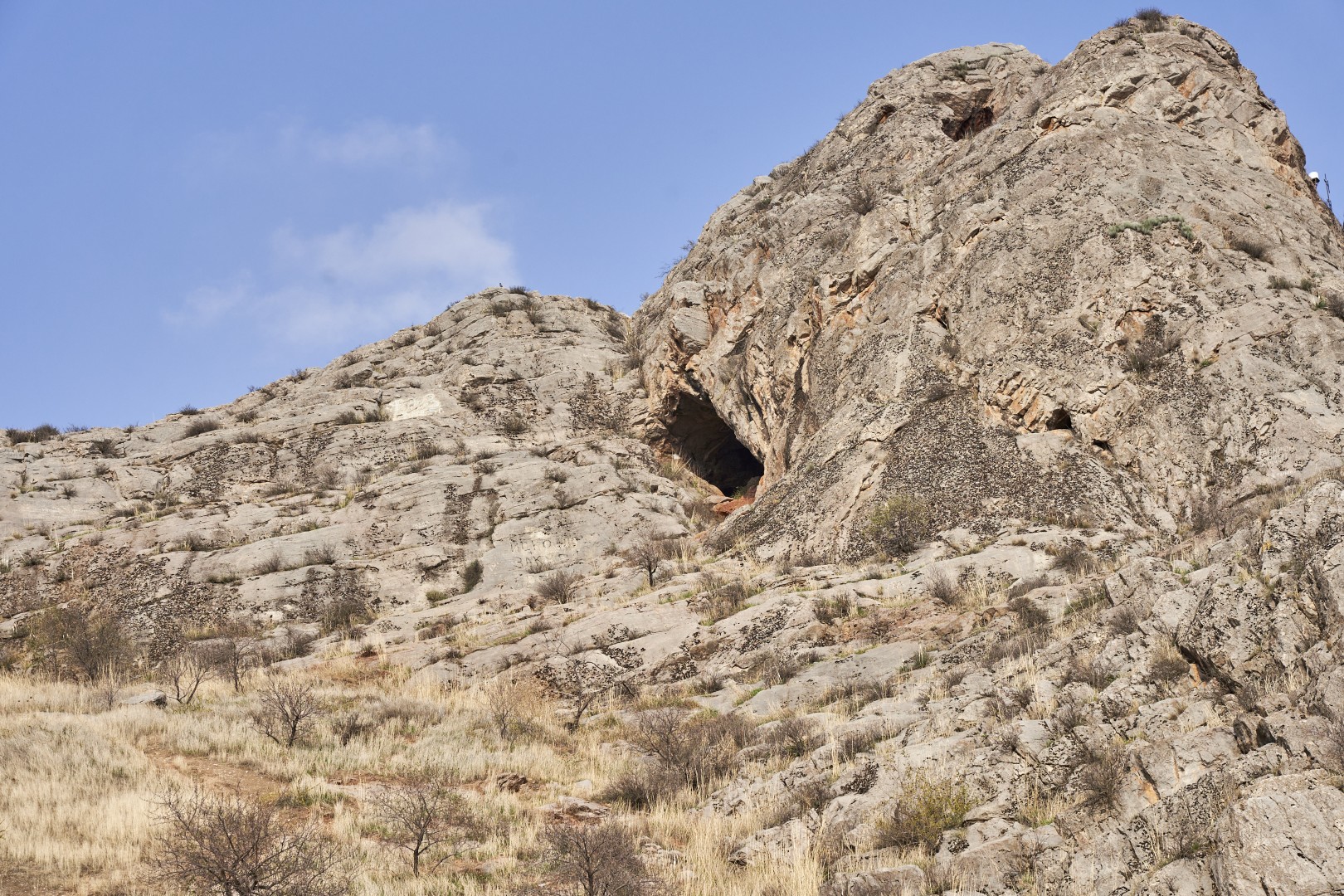
Suleiman Mountain is a five-headed limestone remnant that measures 1140 meters long by 569 meters wide, located at an altitude of over 1000 meters above…
-
Hujra of Babur, the Founder of the Mughal Empire
The most famous historical monument on Suleiman Mountain is the hujra of Zahīr ud-Dīn Muhammad Babur, the founder of the Mughal Empire in the Hindustan…
-
Gate of Fire at Suleiman Mountain
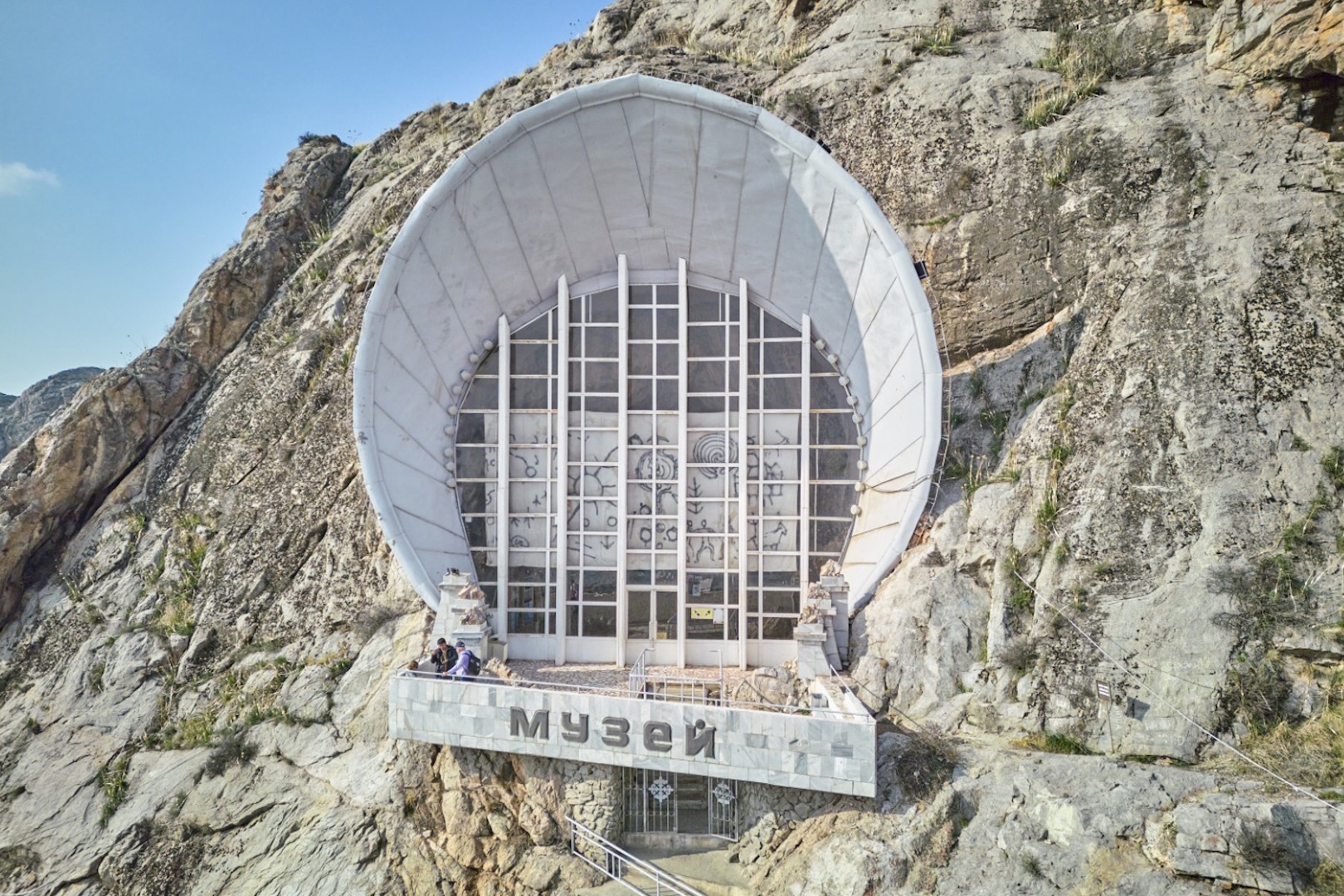
Ancient Osh with its majestic Suleiman Mountain has a magic power, attracting adherents of various religions and beliefs, serving as a place of pilgrimage for…
Other Locations
-
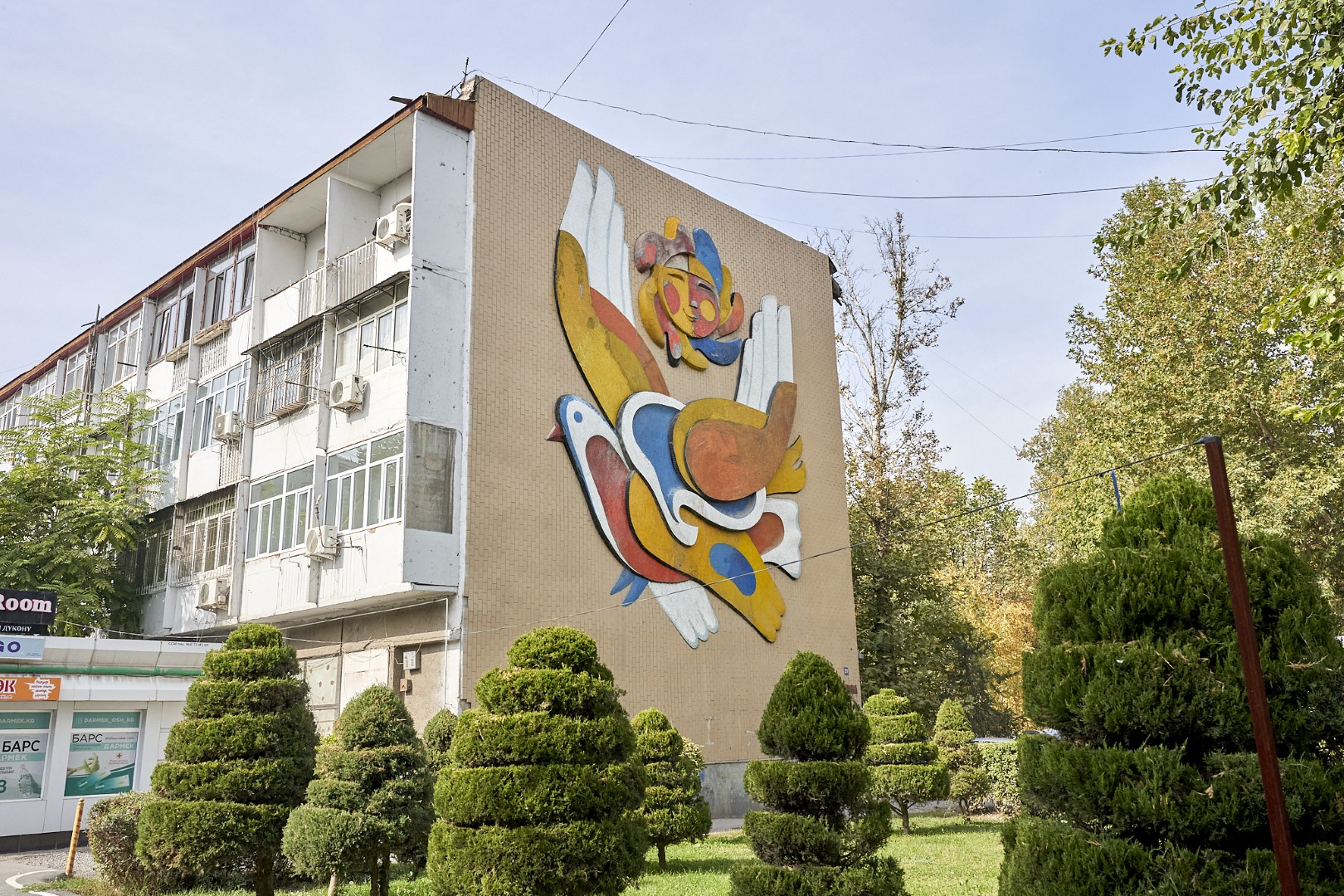
Mosaics as symbols of the era
Monumental mosaics, still preserved on some buildings in Osh, are an instantly-recognizable hallmark of the Soviet period in the history of the city. The first…
-
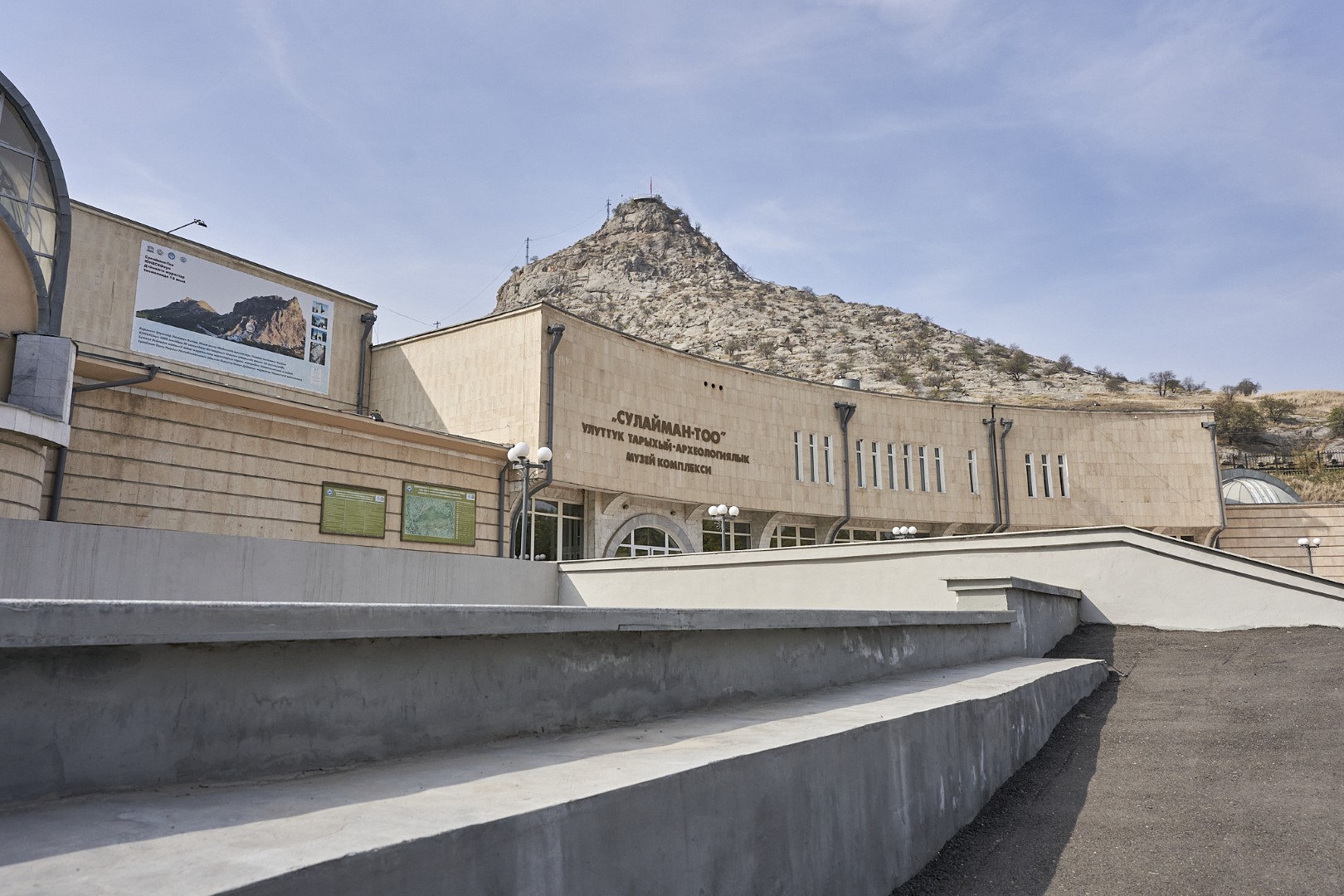
“Zero Milestone”: At the foot of Suleiman Mountain
The square at the foot of Suleiman Mountain’s north face has not always been the open and lively place it is today. Until the 1970s,…
-
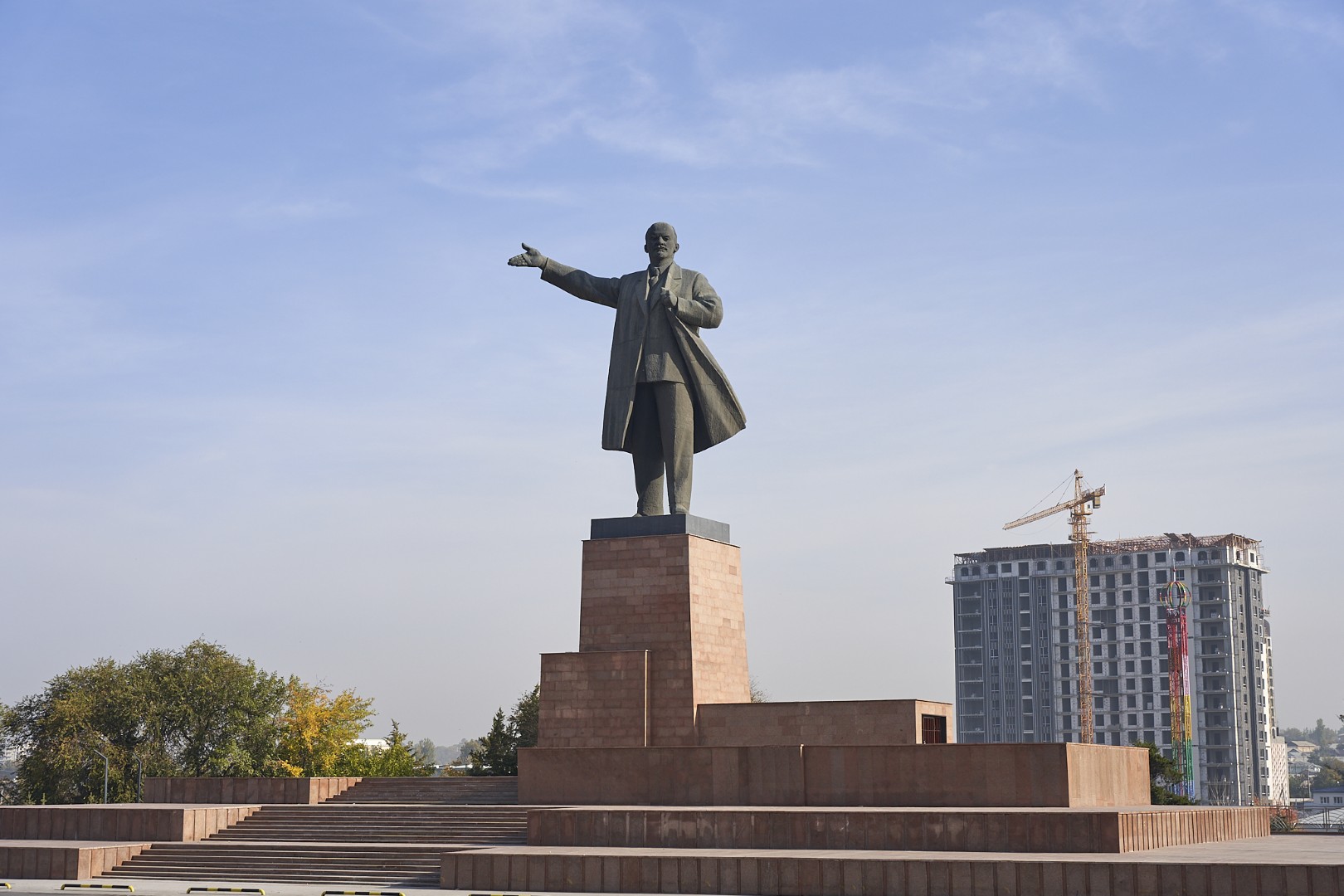
Monuments as symbols of changing eras
An imposing monument to Communist leader Vladimir Lenin, erected in May 1985, still stands in Osh’s central square. The statue itself is 11 metres high…
-

Teshik-Tash
Teshik-Tash is one of the oldest and most colorful passageways to the bazaar, dating back to ancient times. Long ago, it was the most common…
Implementing Partners:



Project Partners:
Project Sponsors:

Initiator: